General Motors Using Radio To Talk With Branch Plants
By Unknown Author
General Motors Export Co erects short-wave stations in South America for communication with branch plants
None0 words
Continue reading...
Share
On this day
Revisit the news, notable people, and historical moments connected to this date.
Portrait 1080 × 1920 PNG · created on your device
General Motors Export Co erects short-wave stations in South America for communication with branch plants
J W Prentiss testifies on offers to buy Ford Co stock for Hornblower & Weeks; Prentiss's career
C C Kinder, missing bro of Cecil, appears; pleads guilty; D T Turner testifies that he paid sum to Wissel; points him out; identifies signature on check to H Gertner's order "for police boat sgt"; Wunsche testifies; testimony stricken out; other testimony
E Connelly escapes while on 24-hr parole granted him to visit dying mother
British Cabinet discusses Minister Chen's refusal to sign accord, text of his preface to first British proposals handed to Chen (Dec memo); awaits new instructions

1927Kenneth Anger, American actor, director, and screenwriter (died 2023)[†]
Kenneth Anger was an American underground experimental filmmaker, actor, and writer. Working exclusively in short films, he produced almost 40 works beginning in 1937, nine of which have been grouped together as the "Magick Lantern Cycle". Anger's films variously merge surrealism with homoeroticism and the occult, and have been described as containing "elements of erotica, documentary, psychodrama, and spectacle". He has been called "one of America's first openly gay filmmakers", with several films released before homosexuality was legalized in the U.S. Anger also explored occult themes in many of his films; he was fascinated by the English occultist Aleister Crowley and an adherent of Thelema, the religion Crowley founded.
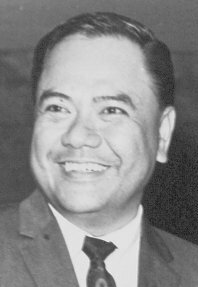
1927Blas Ople, Filipino journalist and politician, 21st President of the Senate of the Philippines (died 2003)[†]
Blas Fajardo Ople was a Filipino journalist and politician who held several high-ranking positions in the executive and legislative branches of the Philippine government, including as Senate President from 1999 to 2000, and as Secretary of Foreign Affairs from 2002 until his death. Perceived as a leftist-nationalist at the onset of his career in public service, Ople was, in his final years, a vocal supporter for allowing a limited United States military presence in the Philippines, and for American initiatives in the War on Terror including the 2003 U.S. invasion of Iraq.

1927A revolt against the military dictatorship of Portugal breaks out at Porto.[†]
The Ditadura Nacional is the name given to the regime that governed Portugal from the end of the First Portuguese Republic with the 28 May 1926 coup d'état, until the adoption of a new constitution in 1933 that ushered in the so-called Estado Novo. The term Ditadura Militar is also used by some to describe the first stages of the dictatorship, while other authors use it for the entire period.