None0 words
Continue reading...
Share
On this day
Revisit the news, notable people, and historical moments connected to this date.
Portrait 1080 × 1920 PNG · created on your device
As a result of a month's steady improvement in wholesale commodity prices, which made the sharpest gain since July, 1929, confidence of consumers in quotations is being restored so rapidly that the stocking up of goods may soon begin, according to the officers of several large industrial corporations.
BERLIN, June 25. SUMMER has come in -- and how! It has laid its warm hand on the German theatre and just about squashed it into unconsciousness. There wasn't much life left in it by late Spring, but the advent of June did it in completely.
1932Niccolò Castiglioni, Italian composer (died 1996)[†]
Niccolò Castiglioni was an Italian composer, pianist, and writer on music.
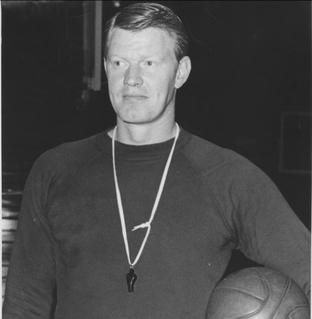
1932Red Kerr, American basketball player and coach (died 2009)[†]
John Graham Kerr, also known as Red Kerr, was an American basketball player, coach, executive and broadcaster who devoted six decades to the sport at all levels. In 2009, he was honored with the Naismith Memorial Basketball Hall of Fame's John W. Bunn Lifetime Achievement Award for his contributions to basketball.

1932Wojciech Kilar, Polish pianist and composer (died 2013)[†]
Wojciech Kilar was a Polish classical and film music composer. One of his greatest successes came with his score to Francis Ford Coppola's Bram Stoker's Dracula in 1992, which received the ASCAP Award and the nomination for the Saturn Award for Best Music. In 2003, he won the César Award for Best Film Music written for The Pianist, for which he also received a BAFTA nomination. In 2012, he became the recipient of Poland's highest distinction, the Order of the White Eagle.
1932Karla Kuskin, American author and illustrator (died 2009)[†]
Karla Kuskin was a prolific American author, poet, illustrator, and reviewer of children's literature. Kuskin was known for her poetic, alliterative style.

1932Slick Leonard, American basketball player and coach (died 2021)[†]
William Robert "Slick" Leonard was an American professional basketball player, coach and color commentator. He played college basketball for the Indiana Hoosiers, where he was a two-time All-American and a member of their national championship squad in 1953. After playing professionally in the National Basketball Association (NBA), Leonard coached the Indiana Pacers to three American Basketball Association (ABA) championships. He was inducted into the Naismith Memorial Basketball Hall of Fame as a coach in 2014.
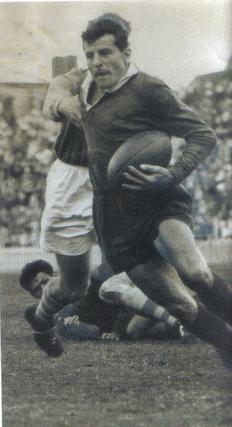
1932Ian Moir, Australian rugby league player (died 1990)[†]
Ian James Moir (1932–1990) was an Australian professional rugby league footballer, a champion wing three-quarter who played in the 1950s and 1960s for South Sydney and Western Suburbs. He made eight Test appearances for the Australian national representative side and represented in four World Cup matches in two World Cups and in 14 Kangaroo tour matches.

1932Quino, Spanish-Argentinian cartoonist (died 2020)[†]
Joaquín Salvador Lavado Tejón, better known by his pen name Quino, was an Argentine cartoonist. His comic strip Mafalda is popular in many parts of the Americas and Europe and has been praised for its use of social satire as a commentary on real-life issues.

1932Hal Riney, American businessman, founded Publicis & Hal Riney (died 2008)[†]
Hal Patrick Riney was an American advertising executive.

1932Rasmus Rasmussen, Norwegian actor, singer, and director (born 1862)[†]
Rasmus Rasmussen was a Norwegian actor, folk singer and theatre director.
1932Altona Bloody Sunday: A riot between the Nazi Party paramilitary forces, the SS and SA, and the German Communist Party ensues.[†]
Altona Bloody Sunday is the name given to the events of 17 July 1932 when a recruitment march by the Nazi SA led to violent clashes between the police, the SA and supporters of the Communist Party of Germany (KPD) in Altona, which at the time belonged to the Prussian province of Schleswig-Holstein but is now part of Hamburg. Eighteen people were killed. The national government under Reich Chancellor Franz von Papen and Reich President Paul von Hindenburg used the incident as a rationale to depose the acting government of the Free State of Prussia by means of an emergency decree in what came to be known as the Prussian coup d'état of 20 July 1932.