Allied Bombers Hit 5 Ships In Moroccan Air-Naval Battle; FRENCH MOROCCO A SCENE OF COMBAT ALLIED PLANES HIT SHIPS AT MOROCCO
By the Associated Press
Spanish sources rept Rabat air base evacuated by French
None0 words
Continue reading...
Share
On this day
Revisit the news, notable people, and historical moments connected to this date.
Portrait 1080 × 1920 PNG · created on your device
Spanish sources rept Rabat air base evacuated by French
Brit pass Matruh
Allies bomb steel and locomotive works and airdrome, Lille, Abbeville airdrome and other Ger targets, occupied France
1942Victor Blank, English businessman and philanthropist[†]
Sir Maurice Victor Blank is an English businessman and philanthropist. He is the former chairman of Lloyds TSB and the current chairman of several educational and charitable organisations including the Social Mobility Foundation, UJS Hillel and Wellbeing of Women.
1942Tom Weiskopf, American golfer and sportscaster (died 2022)[†]
Thomas Daniel Weiskopf was an American professional golfer who played on the PGA Tour and the Champions Tour. His most successful decade was the 1970s. He won 16 PGA Tour titles between 1968 and 1982, including the 1973 Open Championship. He was the runner-up at The Masters four times. After winding down his career playing golf, Weiskopf became a noted golf course architect.

1942Charles Courtney Curran, American painter (born 1861)[†]
Charles Courtney Curran was an American impressionist painter. He is best known for his canvases depicting women in various settings, as well as for his leadership role at the Cragsmoor Art Colony.
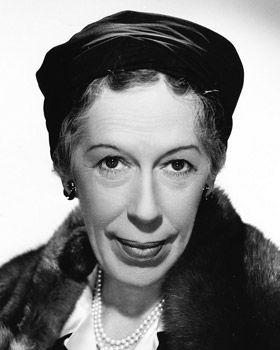
1942Edna May Oliver, American actress (born 1883)[†]
Edna May Oliver was an American stage and film actress. During the 1930s, she was one of the better-known character actresses in American films, often playing tart-tongued spinsters.

1942Battle of Stalingrad: German forces of the 6th Army under general Friedrich Paulus reach finally the river bank of the Volga, capturing 90% of the ruined city of Stalingrad and splitting the remaining Soviet forces into two narrow pockets.[†]
The Battle of Stalingrad was a major battle on the Eastern Front of World War II, beginning when Nazi Germany and its Axis allies attacked and became locked in a protracted struggle with the Soviet Union for control over the Soviet city of Stalingrad in southern Russia. The battle was characterized by fierce close-quarters combat and direct assaults on civilians in aerial raids; the battle epitomized urban warfare, and it was the single largest and costliest urban battle in military history. It was the bloodiest and fiercest battle of the entirety of World War II—and arguably in all of human history—as both sides suffered tremendous casualties amidst ferocious fighting in and around the city. The battle is commonly regarded as the turning point in the European theatre of World War II, as Germany's Oberkommando der Wehrmacht was forced to withdraw a considerable amount of military forces from other regions to replace losses on the Eastern Front. By the time the hostilities ended, the German 6th Army and 4th Panzer Army had been destroyed and Army Group B was routed. The Soviets' victory at Stalingrad shifted the Eastern Front's balance of power in their favour, while also boosting the morale of the Red Army.