On this day

April 22, 1945

Revisit the news, notable people, and historical moments connected to this date.

Portrait 1080 × 1920 PNG · created on your device

Filter by:

Headlines from April 22, 1945

Notable Births

1945Eddy Baldewijns, Belgian politician[†]

Edouard S. L. L. J. Baldewijns is a Belgian politician, member of the Chamber of Representatives and Flemish Government minister. A member of the Belgian Socialist Party and its successor the Flemish Socialist Party, he represented Hasselt from April 1977 to May 1995 and Hasselt-Tongeren-Maaseik from June 1999 to December 1999. He was the Flemish Minister of Public Works, Transport and Spatial Planning from June 1995 to September 1998 and Minister of Education and Civil Service Affairs from September 1998 to July 1999. He was also a member of the Flemish Parliament and its predecessors, the Flemish Council and the Cultural Council for the Dutch Cultural Community, from May 1977 to July 1995.

Gopalkrishna Gandhi

1945Gopalkrishna Gandhi, Indian civil servant and politician, 22nd Governor of West Bengal[†]

Gopalkrishna Devadas Gandhi is a former administrator and diplomat who served as the 22nd Governor of West Bengal serving from 2004 to 2009. He is the grandson of Mahatma Gandhi and C. Rajagopalachari (Rajaji). As a former IAS officer he served as Secretary to the President of India and as High Commissioner to South Africa and Sri Lanka, among other administrative and diplomatic posts. He was the United Progressive Alliance nominee for Vice President of India in the 2017 vice-presidential elections and lost with 244 votes against NDA candidate Venkaiah Naidu, who got 516 votes.

Demetrio Stratos

1945Demetrio Stratos, Greek-Egyptian singer-songwriter (died 1979)[†]

Efstratios Dimitriou, known professionally as Demetrio Stratos, was a Greek-Italian vocalist, songwriter, multi-instrumentalist and music researcher, best known as the co-founder, frontman and lead singer of the Italian progressive rock band Area – International POPular Group.

Notable Deaths

Wilhelm Cauer

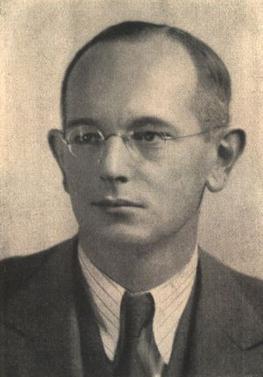
1945Wilhelm Cauer, German mathematician and academic (born 1900)[†]

Wilhelm Cauer was a German mathematician and scientist. He is most noted for his work on the analysis and synthesis of electrical filters and his work marked the beginning of the field of network synthesis. Prior to his work, electronic filter design used techniques which accurately predicted filter behaviour only under unrealistic conditions. This required a certain amount of experience on the part of the designer to choose suitable sections to include in the design. Cauer placed the field on a firm mathematical footing, providing tools that could produce exact solutions to a given specification for the design of an electronic filter.

Käthe Kollwitz

1945Käthe Kollwitz, German painter and sculptor (born 1867)[†]

Käthe Kollwitz was a German artist who worked with painting, printmaking and sculpture. Her most famous art cycles, including The Weavers and The Peasant War, depict the effects of poverty, hunger and war on the working class. Despite the realism of her early works, her art is now more closely associated with Expressionism. Kollwitz was the first woman not only to be elected to the Prussian Academy of Arts but also to receive honorary professor status.

Historical Events

Jasenovac concentration camp

1945World War II: Prisoners at the Jasenovac concentration camp revolt. Five hundred twenty are killed and around eighty escape.[†]

Jasenovac was a concentration and extermination camp established in the village of the same name by the authorities of the Independent State of Croatia (NDH) in occupied Yugoslavia during World War II. The concentration camp, one of the ten largest in Europe, was established and operated by the governing Ustaše regime, Europe's only Nazi collaborationist regime that operated its own extermination camps, for Serbs, Romani, Jews, and political dissidents. It quickly grew into the third largest concentration camp in Europe.

Sachsenhausen concentration camp

1945World War II: Sachsenhausen concentration camp is liberated by soldiers of the Red Army and Polish First Army.[†]

Sachsenhausen or Sachsenhausen-Oranienburg was a Nazi concentration camp in Oranienburg, Germany, used from 1936 until April 1945, shortly before the defeat of Nazi Germany in May. It mainly held political prisoners throughout World War II. Prominent prisoners included Joseph Stalin's oldest son, Yakov Dzhugashvili; assassin Herschel Grynszpan; Paul Reynaud, the penultimate prime minister of the French Third Republic; Francisco Largo Caballero, prime minister of the Second Spanish Republic during the Spanish Civil War; the wife and children of the crown prince of Bavaria; Ukrainian nationalist leader Stepan Bandera; and several enemy soldiers and political dissidents.