On this day

June 28, 1950

Revisit the news, notable people, and historical moments connected to this date.

Portrait 1080 × 1920 PNG · created on your device

Filter by:

Headlines from June 28, 1950

Notable Births

1950Philip Fowke, English pianist and educator[†]

Philip Fowke is an English pianist.

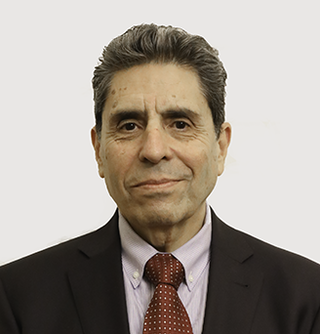
Mauricio Rojas

1950Mauricio Rojas, Chilean-Swedish economist and politician[†]

Mauricio José Rojas Mullor is a Chilean-Swedish politician and political economist, member of the Riksdag between 2002 and 2006. He served as Minister of Cultures, Arts and Heritage of Chile for four days, since August 10 2018 until August 13, under the presidency of Sebastián Piñera.

Chris Speier

1950Chris Speier, American baseball player and coach[†]

Christopher Edward Speier is an American former professional baseball player. He played in Major League Baseball as a shortstop, most notably for the San Francisco Giants and the Montreal Expos. He is known by the nickname "the Alameda Rifle" as a native of the San Francisco Bay Area city who possessed a strong arm during his days as an active player.

Historical Events

Korean War

1950Korean War: Suspected communist sympathizers (between 60,000 and 200,000) are executed in the Bodo League massacre.[†]

The Korean War was an armed conflict on the Korean Peninsula fought between North Korea and South Korea and their allies. North Korea was supported by China and the Soviet Union, while South Korea was supported by the United Nations Command (UNC) led by the United States. The conflict was one of the first major proxy wars of the Cold War. Fighting ended in 1953 with an armistice but no peace treaty, leading to the ongoing Korean conflict.

Hangang Bridge bombing

1950Korean War: Packed with its own refugees fleeing Seoul and leaving their 5th Division stranded, South Korean forces blow up the Hangang Bridge in an attempt to slow North Korea's offensive. The city falls later that day.[†]

The Hangang Bridge bombing was a demolition operation conducted by the South Korean Army to destroy the Hangang Bridge in Seoul, South Korea, on 28 June 1950, to delay the rapid North Korean Army advance towards the Southern part of Seoul.

Korean People's Army

1950Korean War: The Korean People's Army kills almost a thousand doctors, nurses, inpatient civilians and wounded soldiers in the Seoul National University Hospital massacre.[†]

The Korean People's Army encompasses the combined military forces of North Korea and the armed wing of the Workers' Party of Korea (WPK). The KPA consists of five branches: the Ground Force, the Naval Force, the Air Force, the Strategic Force, and the Special Operations Forces. It is commanded by the WPK Central Military Commission, which is chaired by the WPK general secretary, and the president of the State Affairs; both posts are currently headed by Kim Jong Un.

Historical Context for June 28, 1950

In 1950, the world population was approximately 2,499,322,157 people[†]