MARSHALL ASSERTS INFANTRY IS VITAL; Acknowledges Risk in Build-Up of Troops Abroad, but Says It Will Make Conquest Hard MARSHALL ASSERTS INFANTRY IS VITAL
with Arts & Sciences Inst holds lecture series: Sec Marshall
On this day
Revisit the news, notable people, and historical moments connected to this date.
Portrait 1080 ร 1920 PNG ยท created on your device
with Arts & Sciences Inst holds lecture series: Sec Marshall
Deputy Min Gromyko (USSR) and Under-Sec Davies (GB) at Mins deputies conf, Paris, propose inclusion of issue in Big 4 Foreign Mins conf agenda
Rockefeller gives $5 million, 20% of natl goal, for plant improvement if sum is matched
Sen rejects Morse amendment for draft at 18 1/2; increases service time to 24 mos; roll-call
Gainza Paz charged with violating security law; plant formally closed; Confed sets meeting; Gainza por; Santiago (Chile) Nacion urges Latin Amer, US and Eur newspapers boycott Argentine news while Prensa stoppage continues
1951Gerrie Knetemann, Dutch cyclist (died 2004)[โ ]
Gerard Friedrich Knetemann was a Dutch road bicycle racer who won the 1978 World Championship. He wore the Yellow Jersey early in each Tour de France for four consecutive years between 1977 and 1980.
1951Ivor Novello, Welsh singer-songwriter and actor (born 1893)[โ ]
Ivor Novello was a Welsh actor, dramatist, singer and composer who became one of the most popular British entertainers of the first half of the 20th century.

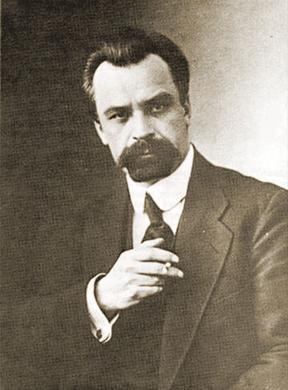
1951Volodymyr Vynnychenko, Ukrainian playwright and politician, Prime Minister of Ukraine (born 1880)[โ ]
Volodymyr Kyrylovych Vynnychenko was a Ukrainian statesman, political activist, writer, playwright and artist who served as the first prime minister of the Ukrainian People's Republic. Prior to his entry onto the stage of Ukrainian politics, he was a long-time political activist, who lived abroad in Western Europe from 1906 to 1914 escaping persecutuion by Russian authorities.
1951Cold War: The trial of Ethel and Julius Rosenberg begins.[โ ]
The Cold War was a period of global geopolitical rivalry between the United States (US) and the Soviet Union (USSR) and their respective allies, the capitalist Western Bloc and communist Eastern Bloc, which began in the aftermath of the Second World War and ended with the dissolution of the Soviet Union in 1991. The term cold war is used because there was no direct fighting between the two superpowers, though each supported opposing sides in regional conflicts known as proxy wars. In addition to the struggle for ideological and economic influence and an arms race in both conventional and nuclear weapons, the Cold War was expressed through technological rivalries such as the Space Race, espionage, propaganda campaigns, embargoes, and sports diplomacy.
In 1951, the world population was approximately 2,543,130,380 people[โ ]