VICTORY FOR QUILL; 40-Cent Package Won by the T.W.U. -- Bus Accord Follows TRANSIT WALKOUT IS AVERTED HERE
By Stanley Levey
Illus
None0 words
Continue reading...
Share
On this day
Revisit the news, notable people, and historical moments connected to this date.
Portrait 1080 × 1920 PNG · created on your device
Illus
Vice Pres Nixon seen assured of nomination as result of Gov Rockefeller withdrawal from race; favors Vice Pres aspirants test strength in primaries or at state convs; seen anxious to avoid cut-and-dried conv; is committed to Calif and Oregon primaries; to curb campaigning until Cong adjourns; Vice Pres aspirants include Secs Mitchell, Seaton, Flemming, Repr Halleck, Sens Keating and Goldwater, Repub chmn Sen Morton, Gov Hatfield; Nixon backers seen accepting Rockefeller withdrawal from Pres and Vice Pres race
Army takes control after King accepts Premier Phoui Sananikone's offer of resignation; conflict between latter and mil leaders over attitude toward Communists, delay in natl elections and status of Phoui Cabinet at issue
Vice Pres Nixon intervenes in deadlock between major producers and USWA; reptdly fails to elicit new indus pay offer; silent on settlement prospect; R M Blough calls USWA pay demands inflationary; Sec Mitchell meets with USWA pres McDonald and A J Goldberg
New devices and techniques for dating relics and sites discussed, W Sullivan rept on AAAS conv; thermoluminescence method explained by Dr Knopoff, magnetic dating by E T Hall for Oxford U group; other techniques include neutron activation, X-ray and optical spectroscopy
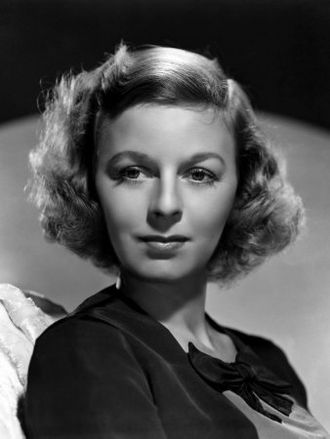
1960Margaret Sullavan, American actress (born 1909)[†]
Margaret Brooke Sullavan was an American stage and film actress. She began her career onstage in 1929 with the University Players on Cape Cod, Massachusetts. In 1933, she caught the attention of film director John M. Stahl and made her screen debut that same year in Only Yesterday. She continued to be successful on stage and film, best known for The Shop Around the Corner.

1960Cameroon achieves independence from France and the United Kingdom.[†]
Cameroon, officially the Republic of Cameroon, is a country in Central Africa. It shares boundaries with Nigeria to the west and north, Chad to the northeast, the Central African Republic to the east, and Equatorial Guinea, Gabon, and the Republic of the Congo to the south. Its coastline lies on the Bight of Biafra, part of the Gulf of Guinea, and the Atlantic Ocean. Due to its strategic position at the crossroads between West Africa and Central Africa, it has been categorized as being in both camps. Cameroon's population of nearly 31 million people speak 250 native languages, in addition to the national tongues of English and French, or both. Early inhabitants of the territory included the Sao civilisation around Lake Chad and the Baka hunter-gatherers in the southeastern rainforest. Portuguese explorers reached the coast in the 15th century and named the area Rio dos Camarões, which became Cameroon in English. Fulani soldiers founded the Adamawa Emirate in the north in the 19th century, and various ethnic groups of the west and northwest established powerful chiefdoms and fondoms.
In 1960, the world population was approximately 3,015,470,894 people[†]