On this day

June 30, 1971

Revisit the music, news, notable people, and historical moments connected to this date.

Portrait 1080 × 1920 PNG · created on your device

Filter by:

Headlines from June 30, 1971

U.S. Grants Chile Credits For Military Equipment

By Tad Szulc Special to The New York Times

US grants Chile $5-million in credits for mil equipment, 1st such gesture by Adm toward Allende Govt; also leases fleet tug Arikara; US officials say move is part of Adm's 'pragmatic policy'; contend Chilean request for credits indicate that despite Marxist orientation, Govt wishes to maintain mil ties with US, noting that Chile continues to welcome US mil advisory group, maintains lease on 8 US naval vessels and remains member of Inter-Amer Defense Bd; Allende has also reptdly asked for increase in Peace Corps volunteers

None636 words

Music on My Birthday

Billboard 200

The Top 50 albums for the chart week of June 30, 1971, covering June 30, 1971.

  1. 1
    Album cover for Tapestry by Carole King

    Tapestry

    Carole King

    Last week
    1
    Peak
    1
    Weeks
    13
  2. 2
    Album cover for Carpenters by Carpenters

    Carpenters

    Carpenters

    Last week
    4
    Peak
    2
    Weeks
    5
  3. 3
    Album cover for Sticky Fingers by The Rolling Stones

    Sticky Fingers

    The Rolling Stones

    Last week
    2
    Peak
    1
    Weeks
    8
  4. 4
    Album cover for Ram by Paul & Linda McCartney

    Ram

    Paul & Linda McCartney

    Last week
    3
    Peak
    3
    Weeks
    5
  5. 5
    Album cover for Jesus Christ Superstar by Various Artists

    Jesus Christ Superstar

    Various Artists

    Last week
    5
    Peak
    1
    Weeks
    33

Notable Births

Monica Potter

1971Monica Potter, American actress[†]

Monica Potter is an American actress. She is known for her starring roles in the films Con Air (1997), Patch Adams (1998), and Along Came a Spider (2001). She also appeared in the horror film, Saw (2004), and The Last House on the Left, a 2009 remake film.

Notable Deaths

Georgi Asparuhov

1971Georgi Asparuhov, Bulgarian footballer (born 1943)[†]

Georgi Asparuhov Rangelov, nicknamed Gundi, was a Bulgarian footballer who played as a striker.

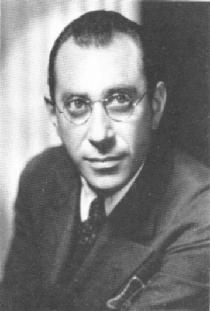
Herbert Biberman

1971Herbert Biberman, American director and screenwriter (born 1900)[†]

Herbert J. Biberman was an American screenwriter and film director. He was one of the Hollywood Ten and directed Salt of the Earth (1954), a film barely released in the United States, about a zinc miners' strike in Grant County, New Mexico. His membership in the Directors Guild of America was posthumously restored in 1997; he had been expelled in 1950.

Georgy Dobrovolsky

1971Georgy Dobrovolsky Ukrainian pilot and astronaut (born 1928)[†]

Georgy Timofeyevich Dobrovolsky was a Soviet cosmonaut who commanded the three-man crew of the Soyuz 11 spacecraft. They became the world's first space station crew aboard Salyut 1, but died of asphyxiation because of an accidentally opened valve. They were the first and only humans to have died in space.

Nikola Kotkov

1971Nikola Kotkov, Bulgarian footballer (born 1938)[†]

Nikola Todorov Kotkov, nicknamed Koteto was a Bulgarian footballer who played as a striker.

Viktor Patsayev

1971Viktor Patsayev, Kazakh engineer and astronaut (born 1933)[†]

Viktor Ivanovich Patsayev was a Soviet cosmonaut who flew on the Soyuz 11 mission and was part of the third space crew to die during a space flight. On board the space station Salyut 1 he operated the Orion 1 Space Observatory ; he became the first man to operate a telescope outside the Earth's atmosphere.

Vladislav Volkov

1971Vladislav Volkov, Russian engineer and astronaut (born 1935)[†]

Vladislav Nikolayevich Volkov was a Soviet cosmonaut who flew on the Soyuz 7 and Soyuz 11 missions. The second mission terminated fatally. Volkov and the two other crew members were asphyxiated on reentry, the only three people to have died in outer space.

Historical Events

Soviet Union

1971The crew of the Soviet Soyuz 11 spacecraft are killed when their air supply escapes through a faulty valve.[†]

The Union of Soviet Socialist Republics (USSR), commonly known as the Soviet Union, was a transcontinental country that spanned much of Eurasia from 1922 until it dissolved in 1991. During its existence, it was the largest country by area, extending across eleven time zones and sharing borders with twelve countries, and the third-most populous country. An overall successor to the Russian Empire, it was nominally organized as a federal union of national republics, the largest and most populous of which was the Russian SFSR. In practice, its government and economy were highly centralized. As a one-party state governed by the Communist Party of the Soviet Union (CPSU), it was a flagship communist state. Its capital and largest city was Moscow.

Historical Context for June 30, 1971

In 1971, the world population was approximately 3,769,847,865 people[†]