JERUSALEM RAID KILLS ARAB GIRL
By Peter Grose Special to The New York Times
thousands of Jews converge at Wailing Wall, Jerusalem, to mark New Yr; illus
None645 words
Continue reading...
Share
On this day
Revisit the music, news, notable people, and historical moments connected to this date.
Portrait 1080 × 1920 PNG · created on your device
thousands of Jews converge at Wailing Wall, Jerusalem, to mark New Yr; illus
Army drops Kill!Kill! as bayonet drill cry; drill illus; some recruit training bases have eliminated bayonet training altogether
Thant, in final annual rept, pleads that UN members give to UN under his successor more power than it has been able to wield under him; illus; says he has never been so convinced as now of usefulness, potential and absolute necessity of UN; warns that life would not be safe without UN and concept of internationalism
In National Football League openers yesterday, the Giants upset the Packers, 42‐40, in Green Bay and the Jets lost, 22.0, to the Colts in Baltimore. (Details, Page 33.)
Brandt says that Brezhnev knows that only solution to possibility of mutually balanced forces lies in dealing with NATO and not individual members; says USSR realizes that Eur security conf cannot be held without US; notes that troop reductions must include Eur natl forces as well as those of foreign powers
Music on My Birthday
The Top 50 albums for the chart week of September 15, 1971, covering September 20, 1971.
Carole King
The Moody Blues
Rod Stewart
The Who
Paul & Linda McCartney

1971Todd Blackadder, New Zealand rugby player and coach[†]
Todd Blackadder is a retired New Zealand rugby union player and professional rugby coach. He played 12 tests for the All Blacks, and had 14 appearances as captain. Blackadder captained the Crusaders to three Super Rugby titles during his time with the franchise. He also won two National Provincial Championship titles with Canterbury. Blackadder coached the Crusaders for nine seasons from 2009 to 2016.

1971Masashi Hamauzu, Japanese pianist and composer[†]
Masashi Hamauzu is a Japanese composer, pianist, and lyricist. Hamauzu, who was employed at Square Enix from 1996 to 2010, was best known during that time for his work on the Final Fantasy and SaGa video game series. Born into a musical family in Germany, Hamauzu was raised in Japan. He became interested in music while in kindergarten, and took piano lessons from his parents.

1971Henrik Larsson, Swedish footballer and manager[†]
Edward Henrik Larsson is a Swedish professional football coach and former player who played many times for the Swedish national team. A striker, Larsson began his career with Högaborgs BK. In 1992, he moved to Helsingborg IF where in his first campaign he helped the club win promotion to Allsvenskan after 24 seasons. He moved to Feyenoord in November 1993, staying for four years before leaving in 1997 to join Scottish Premiership club Celtic and enjoying great success there. During his time in the Dutch Eredivisie, he won two KNVB Cups with Feyenoord. He later played for Barcelona, earning the Spanish title twice and the Champions League before returning to Helsingborg. He ended his career with a loan spell at Manchester United, with whom he won the English Premier League in 2006–07.

1971Dominika Peczynski, Swedish singer and television host[†]
Dominika Peczynski is a Polish-Swedish singer, model and television host.

1971Giorgos Seferis, Greek poet and diplomat, Nobel Prize laureate (born 1900)[†]
Giorgos or George Seferis, the pen name of Georgios Seferiadis, was a Greek poet and diplomat. He was one of the most important Greek poets of the 20th century, and a Nobel laureate.

1971James Westerfield, American actor (born 1913)[†]
James A. Westerfield was an American character actor of stage, film, and television.
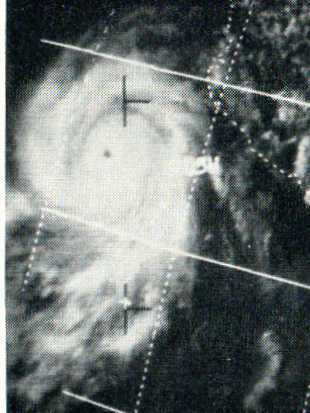
1971Having weakened after making landfall in Nicaragua the previous day, Hurricane Irene regains enough strength to be renamed Hurricane Olivia, making it the first known hurricane to cross from the Atlantic Ocean into the Pacific.[†]
Hurricane Irene–Olivia was the first actively tracked tropical cyclone to move into the eastern Pacific Ocean from the Atlantic basin. It originated as a tropical depression on September 11, 1971, in the tropical Atlantic. The cyclone tracked nearly due westward at a low latitude, passing through the southern Windward Islands and later over northern South America. In the southwest Caribbean Sea, it intensified to a tropical storm and later a hurricane. Irene made landfall on southeastern Nicaragua on September 19, and maintained its circulation as it crossed the low-lying terrain of the country. Restrengthening after reaching the Pacific, Irene was renamed Hurricane Olivia, which ultimately attained peak winds of 115 mph (185 km/h). Olivia weakened significantly before moving ashore on the Baja California Peninsula on September 30; the next day it dissipated.
In 1971, the world population was approximately 3,769,847,865 people[†]