SIMON'S REJECTION OF CITY'S AID PLAN SCORED BY BEAME
By Ronald Smothers
Mayor Beame speaks at parade, NYC, hon Israel; illus (S)
None731 words
Continue reading...
Share
On this day
Revisit the music, news, notable people, and historical moments connected to this date.
Portrait 1080 × 1920 PNG · created on your device
Mayor Beame speaks at parade, NYC, hon Israel; illus (S)
50,000 gather in Central Park on May 11 to celebrate peace in Vietnam and Cambodia; mood is joyous at all-day carnival of antiwar songs and speeches; many speakers refer to 'unfinished business' of war-medical and other aid for Vietnamese and Cambodian people, and drive for total and unconditional amnesty for Amer's war resisters; speakers include Reprs Elizabeth Holtzman and Bella Abzug; rally was organized by coalition of antiwar groups; speakers and entertainers listed; illus (M)
The United Federation of Teachers appeared yesterday to have won a substantial victory in the third citywide election of community school boards. Candidates backed by the union gained a working majority of seats on at least 21 of the 32 local hoards, as the tally of Tuesday's vote continued.
US aircraft carrier Midway arrives in Guam with controversial cargo of 99 repossessed S Vietnamese mil aircraft at curtailment of refugee flights to US continues; US has cited clause in its mil assistance agreement for return of planes, which had been flown to Thailand by S Vietnamese Air Force pilots with 1,200 refugees aboard during last hrs of Saigon's fall; Midway also carried 94 refugees who were rescued from sinking fishing boat in Gulf of Siam; current scene at refugee camps on Guam described (M)
Music on My Birthday
The Top 50 albums for the chart week of May 7, 1975, covering May 12, 1975.
Chicago
Earth| Wind & Fire
Led Zeppelin
Olivia Newton-John
Jimi Hendrix
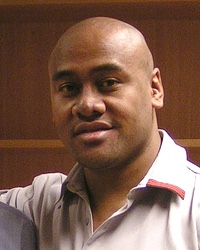
1975Jonah Lomu, New Zealand rugby player (died 2015)[†]
Jonah Tali Lomu was a New Zealand professional rugby union player. He is widely regarded as one of the greatest and most influential players in the history of the sport, and as one of the most talented sportsmen ever. Lomu is considered to have been the first true global superstar of rugby, and consequently had a huge impact on the game.
1975Indochina Wars: Democratic Kampuchea naval forces capture the SS Mayaguez.[†]
During the Cold War, the Indochina wars were a series of wars which were waged in Indochina from 1945 to 1991, by communist forces against the opponents. The term "Indochina" referred to former French Indochina, which included the current states of Vietnam, Laos, and Cambodia. In current usage, it applies largely to a geographic region, rather than to a political area. The wars included:The First Indochina War began after the end of World War II with the War in Vietnam (1945–1946), which acted as the precursor to the First Indochina War. The conflict officially began in 1946 and lasted until the French defeat in 1954. After a long campaign of unsuccessful resistance against the French and the Japanese, Viet Minh forces claimed a victory in the August Revolution after Japanese forces surrendered to the Allies on 15 August 1945, leading to the fall of the Empire of Vietnam and Nguyễn dynasty. In the War in Vietnam (1945–1946), British forces temporarily occupied the South with the objective of disarming Japanese forces, starting from 13 September 1945, only to restore French colonial control in 1946. Meanwhile, the communist Viet Minh sought to consolidate power by terrorizing and purging rival Vietnamese nationalist groups and Trotskyist activists. In the United Nations, and through their alliance with the United Kingdom and the United States, the French demanded return of their former Indochina colony prior to agreeing to participate in the NATO alliance opposing Soviet expansion beyond the countries of the Warsaw Pact in the Cold War. The communist Viet Minh coalition continued fighting the French Union, including the anti-communist State of Vietnam established as part of global decolonization trend after WWII, with support from China and the Soviet Union, ultimately forcing the NATO-backed French out of North Vietnam as a result of 1954 Geneva Conference. The Second Indochina War began as a conflict between the United States-backed South Vietnamese government and its opponents, both the North Vietnamese-based communist Viet Cong and the People's Army of Vietnam (PAVN), known in the West as the North Vietnamese Army (NVA). The conflict began in 1955 and lasted until 1975 when the North Vietnamese army conquered South Vietnam. The United States, which had supported France and its native vassal during the First Indochina war, backed the Republic of Vietnam government in opposition to the communist Viet Cong and PAVN. The North benefited from military and financial support from China and the Soviet Union, members of the communist bloc. Fighting also occurred during this time in Cambodia between the US-backed government, the PAVN, and the communist-backed Khmer Rouge, which also fought alongside deposed King Sihanouk's government in exile and in Laos between the US-backed government, the PAVN, and the communist-backed Pathet Lao. The Third Indochina War was a period of prolonged conflict following the Second Indochina War. The conflict began in 1978 and lasted until the 1991 Paris Peace Agreements on 23 October 1991, in which several wars were fought:The Cambodian–Vietnamese War began when Vietnam invaded Cambodia and deposed the genocidal Khmer Rouge regime. The war lasted from 21 December 1978 to 23 October 1991. Cambodia's constitutional monarchy was then restored in 1993.The Sino-Vietnamese War was a four-week war fought in February–March 1979 between the People's Republic of China and the Socialist Republic of Vietnam. The Chinese launched a punitive expedition in revenge for the Vietnamese invasion of Cambodia, and withdrew a month later to prewar positions. Skirmishes along the border would continue until the two countries normalized relations on 5 November 1991.After the triumph of the Pathet Lao, an anti-communist insurgency in Laos lasted until most Hmong insurgents surrendered in 2007, though some resistance cells remained active for several years after. Thailand, which supported the Lao insurgents, as well as the anti-Vietnamese forces in the Third Indochina War, fought a few skirmishes with Vietnam in 1984, and a short conflict with Laos in 1987.FULRO insurgency in Vietnam – United Front for the Liberation of Oppressed RacesThe Communist Party of Thailand fought an insurgency from 1965 to 1989. They received backing from Laos and Vietnam from 1975 to 1979 but were expelled from their bases and lost most of their supply lines after they sided with the Cambodian-Chinese aligned forces, rather than the pro-Soviet Vietnamese and Laotian regimes.
In 1975, the world population was approximately 4,070,735,277 people[†]