On this day

March 15, 2005

Revisit the news, notable people, and historical moments connected to this date.

Historical Context for March 15, 2005

In 2005, the world population was approximately 6,586,970,132 people[โ€ ]

Notable Deaths

Otar Korkia

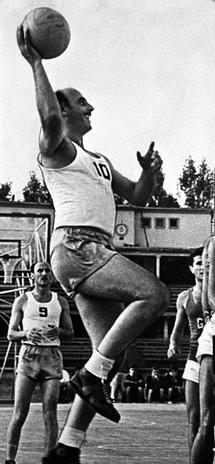
2005Otar Korkia, Georgian basketball player (born 1923)[โ€ ]

Otar Korkia was a Georgian professional basketball player and coach. He was named one of FIBA's 50 Greatest Players, in 1991. He was also named the Best Georgian Basketball Player of the 20th Century, and the Best Georgian Sportsman of the 20th Century. He was born in Kutaisi.

Portrait 1080 ร— 1920 PNG ยท created on your device

Filter by:

Headlines from March 15, 2005

Mother Culture, or Only a Sister?

By John Noble Wilford

Olmec civilization, Mesoamerican society that flourished 3,000 years ago near modern-day Veracruz, Mexico, is considered by many scholars to have been mother culture for later regional civilizations; recent report in journal Science by Dr Jeffrey P Blomster, George Washington University archaeologist, describes evidence of widespread export of Olmec pottery; export of goods, which Blomster asserts would spread Olmec culture, supports mother-culture theory; critics say that exportation of ceramics does not necessarily mean that other cultural aspects, like religion and politics, were also spread and influenced other groups; map; graph; photos (L)

Science Desk2204 words

Perfect Season to Perfect Storm: Steroids Taint McGwire Legacy

By Lee Jenkins

Mark McGwire's record-breaking 70-home-run performance in 1998, source of so much admiration and affection, now elicits mixed feelings from many fans who suspect he may have used steroids; face of steroids has morphed over winter from Jason Giambi to Barry Bonds to McGwire, an uneasy transformation for Major League Baseball and for many of its fans; photo (M)

Sports Desk1839 words

Yes, It's a Lobster, and Yes, It's Blue

By Kenneth Chang

Dr Harry A Frank, University of Connecticut chemistry professor, explains how rare blue lobster comes to exist; description, published in Journal of Physical Chemistry, discusses genetic mutation, which is one in million occurrence; photo (S)

Science Desk380 words

Hawks May Be Awaiting the Stork

By Thomas J. Lueck

The red-tailed hawks known as Pale Male and Lola, having endured the destruction of their Fifth Avenue nest in December and the ensuing media storm before rebuilding with thousands of twigs from Central Park, appear to have crossed another critical threshold in their unlikely battle for turf in the center of Manhattan. According to several naturalists and bird watchers who monitor the hawks' behavior closely, there are eggs in the nest.

Metropolitan Desk491 words

Downtown Arts Plan Remains Uncertain

By Robin Pogrebin

Prospects for all four arts groups--Drawing Center, Freedom Center, Joyce Theater and Signature Theater--that were selected to occupy new cultural buildings at site of World Trade Center remain murky; Lower Manhattan Development Corp, despite pledges of financial support, has yet to specify how much it will contribute toward groups' construction and operating costs; World Trade Center Memorial Foundation, created in December to raise $500 million for cultural buildings, has not yet named chairman; photo (M)

The Arts/Cultural Desk1323 words

Lobbyists Making Big Money in Albany's Chronic Logjams

By Michael Cooper

New York State lobbying industry thrives on near-constant, often bitter political warfare between Gov George E Pataki, Assembly Speaker Sheldon Silver and Senate Republican majority leader Joseph Bruno, three men who control state government to unusual degree; companies like Cablevision have found that they can make more effective case when they have separate lobbyists for each man; need to hire several firms to do what one once did helps explain why state's lobbying industry has grown to $144 million business in 2004, up from $39 million 10 years earlier; during same decade, number of registered lobbyists has nearly doubled, to 3,842 from 1,930; and number of client has grown to 2,224 from 1,099; photos of Pataki, Silver, Bruno and various top lobbyists (L)

Metropolitan Desk2097 words

With Rare Unity, OPEC Ministers Gather in Iran

By Jad Mouawad

OPEC is meeting in Iran for first time since Islamic revolution topped monarchy in 1979 and brought in rule of clerics; gathering in Isfahan is testimony to uncommon consensus that has taken hold in oil cartel over last five years and has shaped group's most successful period since its creation in 1960; oil prices are high, there is little infighting, and comfortable premium is likely to fill OPEC coffers for a while; official Saudi Press Agency says OPEC should increase its quota by 500,000 barrels a day above current ceiling of 27 million barrels to help ease prices; OPEC's intentions and signals have been mixed, and in past, it has sometimes raised hopes before meeting, only to change little; Iran's Oil Min Bijan Zanganeh suggests more supply is not needed; 11 OPEC members are currently producing 29.5 million barrels a day, including oil from Iraq, which is not assigned quota; Saudi Oil Min Ali al-Naimi expects prices to remain at $40 to $50 a barrel for rest of year; oil for delivery in April rises 52 cents, to $54.95 a barrel in New York trading; photo (M)

Business/Financial Desk1356 words

State Regents Adopting New Approach to High School Math

By Susan Saulny

New York State Board of Regents is set to adopt sweeping changes in way high school mathmematics is taught; reorganization will include teaching math in three one-year courses for algebra, geometry and combined algebra II-trigonometry class; also considers adding third Regents math exam, but students would need to pass only one exam to graduate; new system stresses conceptual understanding over rote learning; schools would be encouraged to teach pre-calculus or some other form of math to seniors; plan could take effect as early as 2006 (M)

Metropolitan Desk935 words

Feeling Good About Physics, Like Einstein

By Clyde Haberman

THE story lingers in memory, though many details have faded. It was told to us years ago by a man who was once at Princeton University. That would have been around 1940. He looked out his bedroom window one morning. There on the street, deep in conversation, were Albert Einstein and Thomas Mann, both of whom had fled Nazi Germany and landed in Princeton.

Metropolitan Desk787 words