GI'S IN SUWON AREA; SOUTH KOREANS FLEEING BEFORE THE INVADERS
By Unknown Author
Pusan base command set up under US Brig Gen Garvin
None0 words
Continue reading...
Share
On this day
Revisit the news, notable people, and historical moments connected to this date.
Portrait 1080 × 1920 PNG · created on your device
Pusan base command set up under US Brig Gen Garvin
United States troops have gone into action in Korea against the North Korean Communists, General MacArthur's headquarters reported. The front was called fluid around Suwon after having been nearly at a standstill. American troops were building up strength, from a base at Pusan. [1:8; map P. 2.] In one air action friendly planes fired rockets and machine guns on an American position. [2:2.]
Sec Snyder makes pub Treas statement of budget results, fiscal '50; shows $3,122 billion deficit, $2,411 billion below Truman estimate; drop in receipts noted
With one day remaining of the four-day holiday week-end, traffic fatalities in the nation rose sharply yesterday to 336, an increase of ninety-six in twenty-four hours.
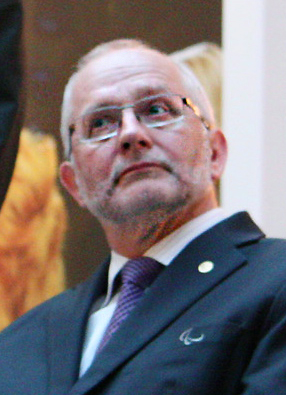
1950Philip Craven, English basketball player and swimmer[†]
Sir Philip Lee Craven is an English sports administrator, former Paralympic wheelchair basketball player, swimmer and track and field athlete. Between 2001 and 2017 he was the second president of the International Paralympic Committee (IPC).
1950David Jensen, Canadian-English radio and television host[†]
David Allan Jensen is a Canadian-born British radio DJ and television presenter. Born in Victoria, British Columbia, Jensen began as a radio DJ on Radio Luxembourg. Jensen was later a broadcaster for the BBC from 1976 to 1984, as a host on BBC Radio 1 and presenter on the TV music programme Top of the Pops from 1977 to 1984. Jensen has also hosted and presented for Capital FM and ITV among other stations.

1950Cold War: Radio Free Europe first broadcasts.[†]
The Cold War was a period of global geopolitical rivalry between the United States (US) and the Soviet Union (USSR) and their respective allies, the capitalist Western Bloc and communist Eastern Bloc, which began in the aftermath of the Second World War and ended with the dissolution of the Soviet Union in 1991. The term cold war is used because there was no direct fighting between the two superpowers, though each supported opposing sides in regional conflicts known as proxy wars. In addition to the struggle for ideological and economic influence and an arms race in both conventional and nuclear weapons, the Cold War was expressed through technological rivalries such as the Space Race, espionage, propaganda campaigns, embargoes, and sports diplomacy.
In 1950, the world population was approximately 2,499,322,157 people[†]